Letting Your Losers Get Smaller
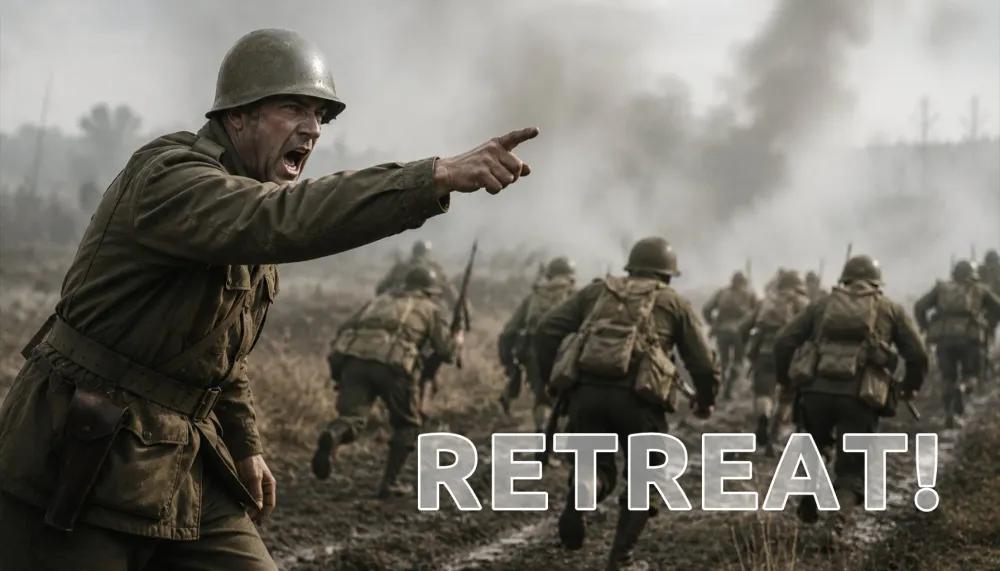
Don’t add additional troops to a potentially bad situation.
I'm a fan of buying an initial position at 3-7% at cost and then letting management execution determine its future position size. If management executes the stock will go up and naturally become a larger position. If the stock goes down, it will naturally become a smaller position. In this fashion the portfolio concentrates itself into its winners and the losers become insignificant. I’ve found it takes as much discipline to not add to a loser as it does to hold a winner.
In September 1812, Napoleon advanced on Moscow with the largest army Europe had ever assembled. The Russian commander, Mikhail Kutuzov, did something that looked like cowardice and even treason. After a brutal, inconclusive battle at Borodino, he gave up Moscow without a fight.
His own officers were furious. The Tsar was humiliated. Moscow was a symbol, the soul of Russia, and Kutuzov ordered his army to give up the city rather than die defending it. Kutuzov understood something his critics didn't. The position wasn't the city. The position was the army. Lose the army and you lose everything. Lose the city and you've lost some buildings.
Napoleon marched into an empty, burning Moscow and waited for the surrender that never came. There was no one to surrender to. Kutuzov had left without giving Napoleon the one thing he needed, a decisive battle. Kutuzov preserved his army, traded space for time, and let the Russian winter, disease, and burned-out supply lines dismantle Napoleon’s army.
By December, the Grande Armée had been reduced from roughly 600,000 men to tens of thousands. The Russians won by retreating and preserving themselves. Kutuzov’s big decision was not to add good troops to a losing position. His victory came from what he refused to do.
A century later, a different set of generals forgot the lesson.
In 1916, the Germans attacked a French fortress town called Verdun. The Germans didn’t really want the town. They wanted to “bleed France white” and to make the French pour so many men into defending it that the meat grinder of death would break France’s will to continue.
The French took the bait and decided Verdun had to be held at any cost. Not because of any real value but because the place had become a symbol.
Once enough men were buried there, the dead became the argument for sending more. To stop was to confess that everyone already killed had died for nothing. So, they kept sending new troops to vindicate the divisions that had already been ground up and buried. In ten months, something like 700,000 to 800,000 killed and wounded on both sides. The battle lines barely moved.
Why would they do this? For the same reason a stock picker stares at a losing position and buys more. It’s the same flawed logic as Verdun. A stock picker gets anchored to their sunk cost. Your ego gets attached to an underperforming management team or a business that “should” be doing better.
We all have these losers in our portfolios. If you had just let the stock drop and allowed the position allocation to shrink, it wouldn’t have been that big of a deal. But you didn’t let it get smaller. You made it worse by throwing fresh capital into the meat grinder as it drops. The position consumes your mindshare.
The point of no return is when you want to be right more than you want to make money. The stock becomes symbolic like Verdun. Now you have 15% at cost in a 4% position.
Averaging down can be like juggling dynamite, and it has incinerated more capital in microcap than bear markets. If you want to know when to average down, read this.
Initial position sizing has become more important to me. When I size something right in the beginning it allows me to do the right thing later. It allows me to see reality faster. What do I mean by this?
At the beginning of every investment an investor is normally at peak euphoria and expectations. It’s very easy in this mental state to oversize a position.
In 80% of cases you realize you were earlier to the thesis than you thought. The inflection or acceleration gets pushed out another quarter or two, and you wish you'd sized it smaller from day one. In half of those cases, the inflection never comes at all.
In most cases you would be better off under sizing your initial position. Let management execute and the ascending stock price earn its higher allocation in the portfolio.
When timelines get pushed and you still believe in your thesis, let the stock drift lower and the allocation retreat. Don’t add additional troops to a potentially bad situation.
A big part of winning is letting your losers get smaller and living to fight another day.
Interact and learn with 250+ of the best microcap investors on the planet:
MicroCapClub is an exclusive forum for experienced microcap investors to share and discuss microcap companies (sub $1 billion market cap) trading on global markets. Since 2011, our members have profiled 1400+ microcap companies, 300+ have turned into multi-baggers. Investors can join our community by applying to become a member or subscribing to gain instant access. For more information, visit https://microcapclub.com/




Comments
Loading comments…