Quality - The Most Overused Term in Investing
Quality is extremely difficult to find in small public companies
The Bayeux Tapestry is nearly 70 meters long (half a meter tall), embroidered with wool thread on linen, and it’s been around since the 11th century. The tapestry is one of those things that shouldn’t exist. Not because it’s controversial, but because it’s fragile.
A thousand years of different kings, fires, floods, wars, careless hands, and bored soldiers should have turned it into dust. And yet it’s still here, telling its story in pictures like a medieval movie strip.
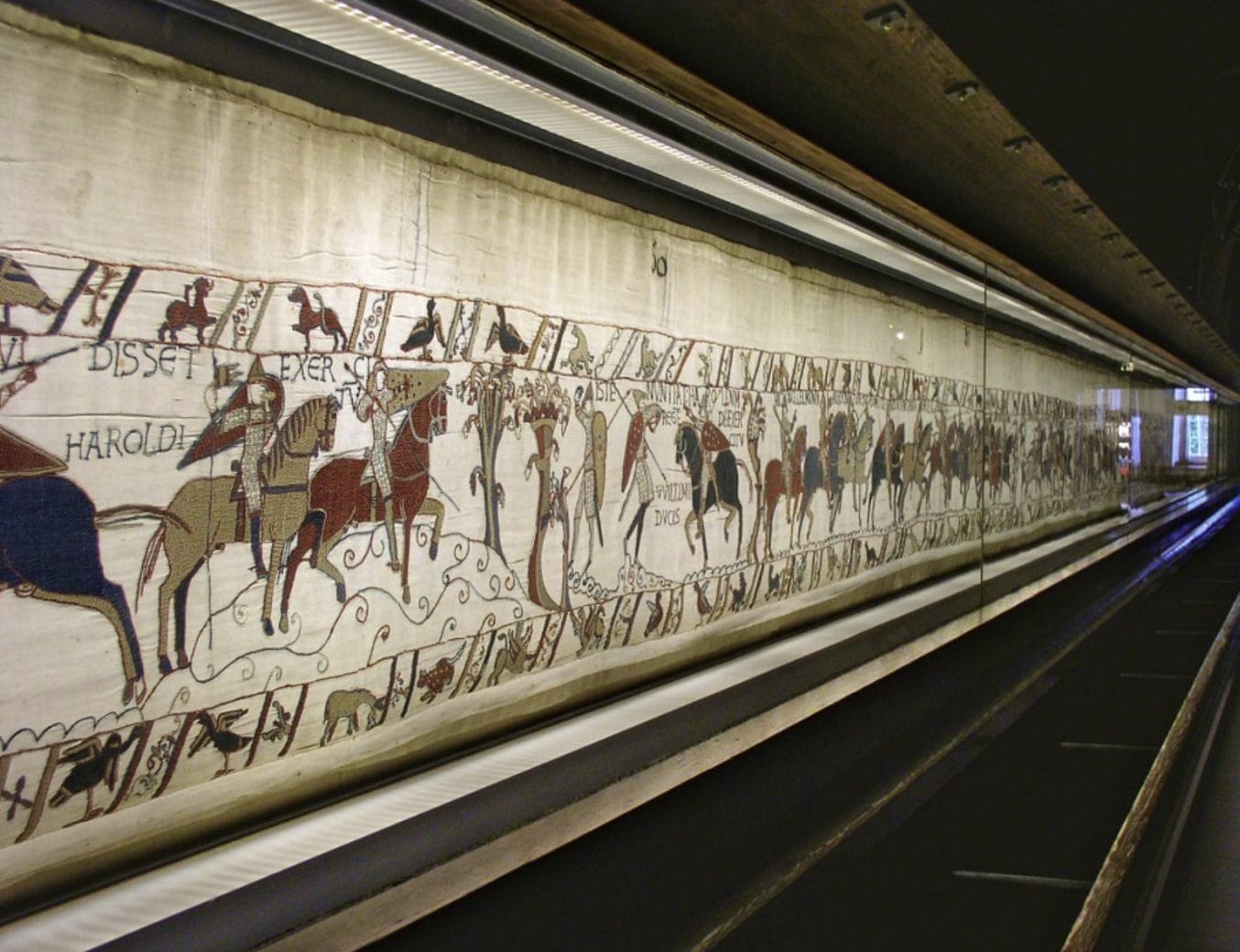
Its origins date back to the year 1066. England’s King Edward dies, and the crown becomes a prize. Harold Godwinson takes it. William, Duke of Normandy, says Harold promised it to him. Armies move. Ships are built. Oaths are sworn. And on a windy October day at the Battle of Hastings, Harold dies and William wins, eventually becoming known as William the Conqueror. The tapestry is basically the victory speech, stitched.
Most historians think it was commissioned by Bishop Odo of Bayeux, William’s half-brother and likely made in England in the 1070s. It was likely made to decorate Odo’s newly built Bayeux Cathedral around its consecration in 1077. It’s funny because the conquerors may have owned the story, but the conquered likely did much of the work of the Tapestry. History is full of ironies like that.
For centuries it was preserved in Normandy, later associated with Bayeux Cathedral. Over time it became less of a local treasure and more of a European artifact. As it became more famous, it became more at risk because famous things attract people who want to use them.
In World War II, the tapestry was treated like a strategic object. Even before the war began, officials moved it for protection. It survived not because it was tough, but because people decided it was worth protecting when it was most inconvenient to do so.
There’s a compounding effect to cultural objects. The longer something lasts, the more meaning it accumulates. Not because it changed, but because we did.
That’s the quality in art: craftsmanship strong enough to carry a story 1000 years, and every few decades needing to find a new group of people who value it enough to preserve it.
I’ve always been interested in survival and quality. A gave a presentation during the depths of covid on the topic here.
The Merriam-Webster definition of quality - degree of excellence : how good, bad, useful, etc. something is
My definition: Quality is an idea, a piece of artwork, a business, a relationship, or even a book that keeps working (providing value) even after conditions change over time.
Quality is an interesting topic because it's one of the most overused terms in investing. Investor’s throw its use around so liberally that it dilutes its core meaning.
Most investors definition of a quality business or quality management has nothing to do with quality - it’s simply the stock they own that is up the most in the last 12-months.
Quality is a label that can only be earned over 10+ years because any business and management can do well for 1-2-3 years because of luck, fad, investor sentiment, few big orders that result in a few big quarters. A stock can 2-10x and it has nothing to do with quality.
Here are some characteristics of quality that come to mind:
- Scarcity - a business with a strong competitive advantage that is difficult to duplicate.
- Independence – a company that is not overly dependent on a single supplier, customer, or government regulation. They are also not dependent on capital markets.
- Permanence - an antifragile company designed for multi-generational endurance. Management focused on a company’s balance sheet but also value growth as a key indicator they are increasing market share. Endurance means playing offense and defense.
- Owner Management –management that prioritizes the company's well-being, a happy workforce, satisfied customers, and balancing innovation with frugality.
When you think of these characteristics, quality becomes extremely difficult to find in small public companies. Most microcaps are young, fragile with relatively weak balance sheets. Especially microcaps sub-$100 million market cap.
Most microcaps are dependent on the stock market. They must raise money every 1-2 years to fund operations which means they must produce a narrative that will excite the crowd. They live or die by the ability to access capital markets. In many ways they are children who are growing up and figuring out who they are while still dependent on their parents.
It is ironic that the best performing microcaps are normally independent. The ones that don’t NEED to access capital markets. They can stand on their own two feet. They earn their own money and can pay their own bills.
There are quality businesses that don’t make great stocks. These companies normally dominate niche markets that aren’t growing. They are like value traps, but they should be called quality traps. Value traps snare investors by using cheapness as bait. Quality traps snare investors by using a couple quality characteristics as bait. They are the market leader in VHS tapes or some other obscure niche. They might be good businesses, but they aren’t great stocks.
I believe growth is a crucial component of quality, but growth doesn’t always align with quality. For a small company to grow quickly there is usually some form of overreaching or aggressive tactics that sacrifice quality and durability in the short-term such as disrupting the corporate culture, leveraging the balance sheet or equity dilution.
Patrick O’Shaughnessy recently interviewed Henry Ellenbogen who has one of the best track records in smallcap growth investing. He invested in Amazon, Netflix, and many others early on in their public lifecycle. He gave this wonderful statistic.
"4000 average public stocks. How many are great? 1%.
Every rolling 10-year period we have 40 stocks that can compound at 20%, and 80% of those start their journey as small caps. That's why we love small caps."
In a financial world that loves private equity and keeping private companies private, Ellenbogen is a bit of an outlier. He preaches the advantages of being public. The main advantage is if you want to be one of those 1% outliers the public markets won’t allow you to be lazy. You can’t just focus on innovation, or growth, or profitability. You must do all three.
“I believe to build a great [public] company, you have to balance growth, profitability, and innovation. You have to be in the "and" business, not the "or" business."
My report card as a fund manager is my 10-year performance versus the S&P 500. The report card for any public CEO is the same thing. It’s their company's rolling 10-year stock chart versus the S&P 500. Quality shines through over time and mediocrity reverts to the mean. Find a CEO + Business that has outperformed the S&P for 10 years or more and those are the outliers that deserve recognition and the label of “quality”.
Interact and learn with 250+ of the best microcap investors on the planet:
MicroCapClub is an exclusive forum for experienced microcap investors to share and discuss microcap companies (sub $1 billion market cap) trading on global markets. Since 2011, our members have profiled 1400+ microcap companies, 300+ have turned into multi-baggers. Investors can join our community by applying to become a member or subscribing to gain instant access. For more information, visit https://microcapclub.com/




![Lindbergh (LDB.MI): Rolling up Italian HVAC with vendor loans [Update]](/content/images/size/w600/2026/10/LDB-BLOG-4.png)

Comments
Loading comments…