Finding Monsters in the Desert
The Sahara desert is roughly the size of the United States. The microcap ecosystem can feel like the Sahara dessert.
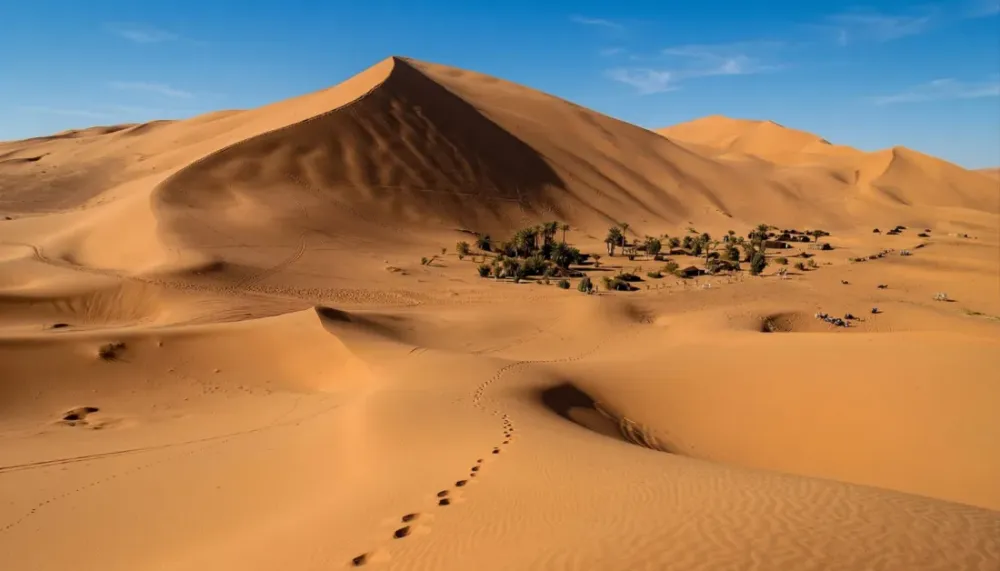
During the winter of 1902, H.J.L. Beadnell was a geologist working for the Geological Survey of Egypt. He was doing the unglamorous work of surveying the topography of the Sahara Desert.
One day he was far from civilization. He was two hundred miles southwest of Cairo, in a valley of the Sahara Desert.
The valley itself was located behind a mountain known as Garet Gohannam "the Mountain of Hell". When the sun sets, the mountain glows with an eerie red light.
While trekking through the valley he noticed weathered bones protruding through the yellow sandstone. He then saw many more. When he analyzed the fossil remains he realized they were giant marine fossils. They looked like whales, but these were different.
They looked like monsters.
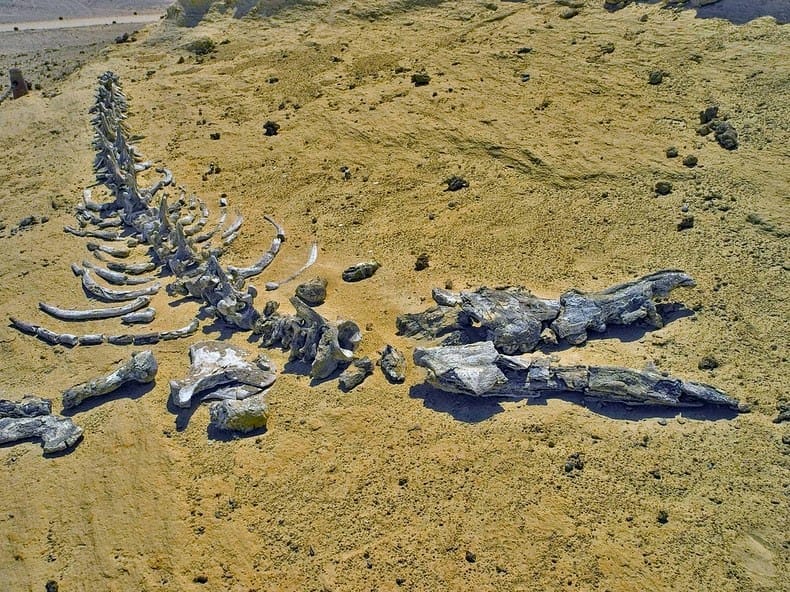
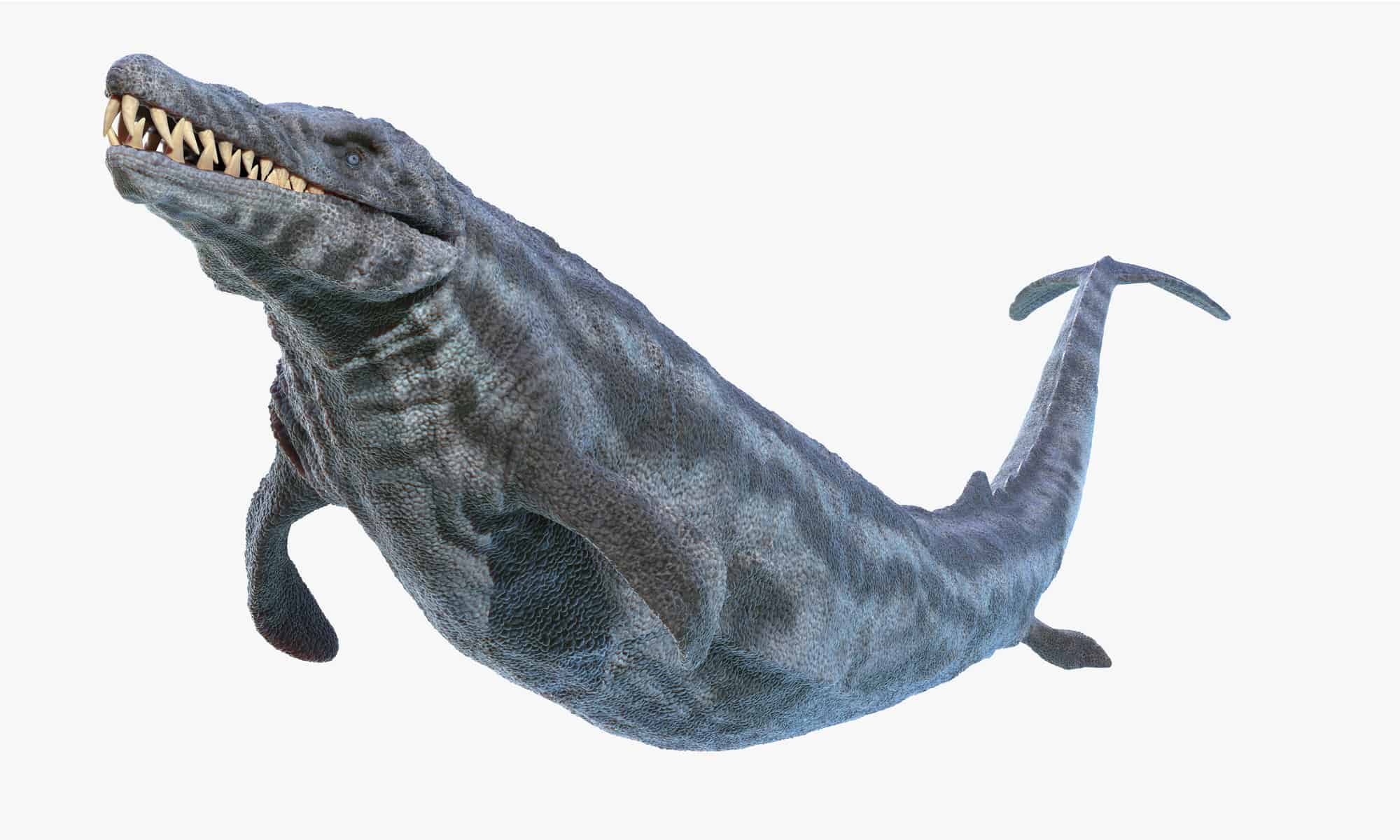
The one skeleton reached 70 feet long. It had a long serpentine body with a head that looked like an alligator. But there wasn’t just one of these beasts. There were hundreds of them.
How lonely it must have felt. Beadnell all alone in the middle of nowhere with the remains of hundreds of gigantic sea monsters around him. He was likely filled with excitement, horror, and “WTF is this?!”.
Beadnell passed his findings onto Charles Andrews of the Natural History Museum in London, who, in 1905, officially named the species Basilosaurus.
What were the remains of prehistoric sea monsters doing in the middle of the desert?
A long time ago this valley was the Tethys Sea. It was shallow, tropical, and teeming with life. Today, the seabed is now the dessert floor. Thousands of years of winds have peeled back layer after layer, and it now reveals a graveyard of mythical sea creatures. The Basilosaurus is now known as the T-Rex of the sea.
The valley was like finding a specific zip code where all these giants lived. This wasn’t a place where they came to die. The shallow bay was where they feasted.
The area would go forgotten for sixty years due to it being so hard to get to without the help of 4x4 vehicles. In the late 1980’s it was eventually called Wadi al-Hitan (Arabic for "Valley of the Whales") by the Egyptian government. In 2005, Wadi al-Hitan became a protected area under international treaty by UNESCO.
Even today, only 1000 people visit the secluded site each year.
The Sahara desert is roughly the size of the United States. The microcap ecosystem can feel like the Sahara dessert. It is massive by surface area, roughly 60% of all public companies globally. Few are willing to survey this investment topography. But that in itself is the opportunity.
You could search for days, weeks, months and find nothing unique. But if you had the help of 100 or 1000 highly skilled microcap investors you would likely find something faster.
On MicroCapClub we have many of the world’s best microcap stock pickers searching the vast microcap ecosystem for the next multibagger. Our global community produces 10-20 ideas per month.
We summarize each new investment thesis down to a paragraph so you can quickly digest the ideas and drill down on those you connect with to start your research. You can view over 1,500 discussions, interact with members, and be proactive with the community on due diligence.
Since 2011, our members have profiled 1,500 microcaps, 300+ multi-baggers, 256 have been acquired.
Interact and learn with 250+ of the best microcap investors on the planet:
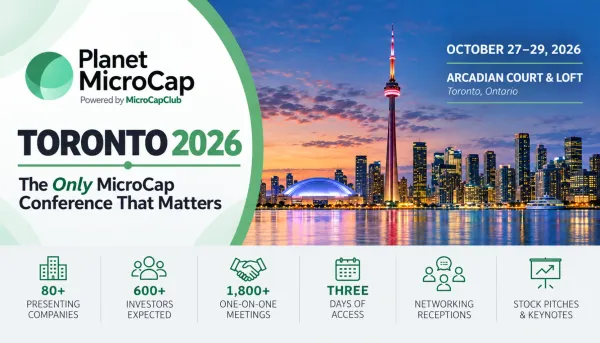
Several hundred of us are meeting up in Las Vegas for the Berkshire of microcap. You don’t have to be part of MicroCapClub to attend. Registration is FREE FOR ALL INVESTORS.

MicroCapClub is an exclusive forum for experienced microcap investors to share and discuss microcap companies (sub $1 billion market cap) trading on global markets. Since 2011, our members have profiled 1400+ microcap companies, 300+ have turned into multi-baggers. Investors can join our community by applying to become a member or subscribing to gain instant access. For more information, visit https://microcapclub.com/


Comments
Loading comments…